By SKM
September 23, 2025
ISLAMABAD: In a major development aimed at tackling Pakistan’s longstanding circular debt crisis, the Central Power Purchase Agency (CPPA-G), on behalf of the federal government, is set to sign a Rs1.225 trillion loan agreement with a consortium of 18 commercial banks today (Wednesday, September 24, 2025).
The signing ceremony will take place at the Prime Minister’s Secretariat. Prime Minister Shehbaz Sharif, who is currently attending the United Nations General Assembly (UNGA) session in New York, will virtually witness the proceedings, a top official of the Power Division confirmed to this scribe.
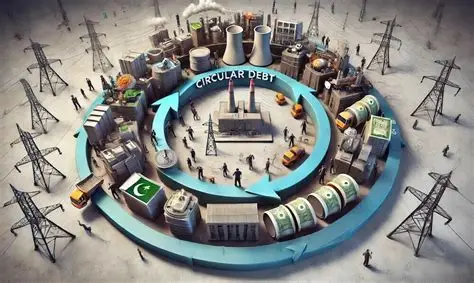
“The substantial loan package is intended to significantly reduce the country’s circular debt stock, bringing it down from Rs1.614 trillion to just Rs339 billion,” the official said. “This follows months of intensive negotiations and financial restructuring spearheaded by the government’s Task Force on Power, which had already brought down circular debt from a peak of Rs2.381 trillion earlier this year.”
Under the agreement, Rs659 billion of the total loan amount will be used immediately to clear liabilities parked with Power Holding Private Limited (PHPL). The remaining funds will be credited to CPPA’s account within a week, after which disbursements will be made to various power producers, including Chinese Independent Power Producers (IPPs).
The loan has been secured at a competitive markup of KIBOR minus 0.90 basis points, with the effective interest rate expected to range between 10.5% and 11.5%.
To repay the loan, the government has embedded a Debt Service Surcharge (DSS) of Rs3.23 per unit into the electricity tariff. Officials clarified that the surcharge is already in effect and will remain in place for six years—the full repayment period. Although the DSS had previously been subject to a 10% cap, that ceiling has now been lifted to comply with structural benchmarks under the ongoing International Monetary Fund (IMF) program.
However, authorities emphasized that no increase in the surcharge rate is currently under consideration. The DSS will be deducted at source by commercial banks when electricity bill payments are processed.
Unlike a previous Rs658 billion loan extended to the power sector with a government guarantee, the current financing arrangement does not involve any sovereign guarantee. Instead, the loan is being extended directly to CPPA based on the power sector’s sizeable receivables—representing a significant shift in risk-sharing and financial responsibility. The CPPA’s Board of Directors has already approved the revised loan structure in collaboration with the participating banks.
The government had initially proposed a Rs1.275 trillion facility, but scaled it down to Rs1.225 trillion after PHPL settled part of its liabilities and cleared several key payments. The restructuring was further supported by the termination of six non-performing IPP contracts, Rs387 billion in waived late payment interest (LPI), and clearance of Rs348 billion in arrears—of which Rs127 billion was covered through budgeted subsidies and Rs221 billion by CPPA directly.
Once the full amount is disbursed, officials anticipate that the remaining circular debt of Rs339 billion will be addressed through further reforms and efficiency improvements in distribution companies (DISCOs).
The high-profile signing ceremony will be attended by top government officials, including the Deputy Prime Minister, federal ministers for Power, Finance, Economic Affairs, Petroleum, Planning, and Information Technology, along with the Governor of the State Bank of Pakistan, the NEPRA chairman, and senior representatives of IMF, World Bank, and Asian Development Bank (ADB).
Also present will be chief executives from major power sector entities such as CPPA-G, PHPL, and DISCOs including LESCO, MEPCO, PESCO, HESCO, and others. Senior representatives from all 18 commercial banks involved—including HBL, NBP, UBL, MCB, Meezan Bank, and Bank Alfalah—will also witness the formalization of the agreement.
This landmark financial intervention is seen as a pivotal step toward restoring fiscal discipline in the power sector, meeting IMF program targets, and paving the way for broader structural reforms in Pakistan’s energy ecosystem.
—Ends