By SKM
September 12, 2025
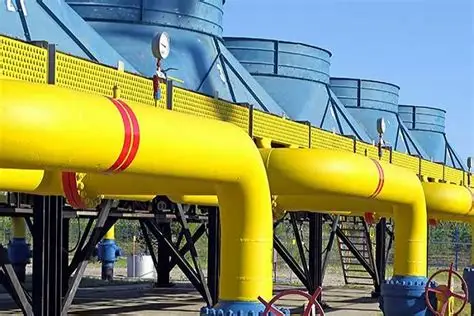
ISLAMABAD: The government has officially notified the off-the-grid levy on captive power plants (CPPs) for the months of April, May, and June 2025 — but the anticipated revenue from the levy is expected to fall drastically short of projections, as gas consumption by industrial units continues to nosedive.
For April, the levy has been fixed at Rs570 per MMBTU, followed by Rs550 in May and Rs402 in June. However, senior officials have confirmed that the actual revenue collection will remain nominal due to a sharp decline in gas consumption by CPPs across the country.
According to official data, gas usage by captive power plants within the jurisdiction of Sui Northern Gas Pipelines Ltd (SNGPL) has plummeted from 150 million cubic feet per day (mmcfd) to just 26 mmcfd. Similarly, in other regions, consumption has dropped from 200 mmcfd to 95 mmcfd. This dramatic fall has shattered budgetary expectations, which were based on an assumed consumption of 350 mmcfd — a figure critics argue was unrealistically projected by bureaucrats in Islamabad. The federal budget had earmarked Rs105 billion in revenue from the off-grid levy, a target now seen as virtually impossible to achieve.
The export-oriented industrial sector, particularly the textile industry, had long relied on CPPs using a blend of local and imported gas to ensure uninterrupted and high-quality power supply. However, under strict conditions imposed by the International Monetary Fund (IMF), the government raised the gas price for CPPs to Rs3,500 per MMBTU and introduced a phased off-grid levy: 5% from February 2025, increasing to 10% in July, 15% in January 2026, and peaking at 20% in August 2026.
These escalating costs have severely affected the export sector. Faced with surging input prices, many industrial units have drastically cut their gas consumption, contributing to a noticeable decline in textile exports. “At $15.36 per MMBTU, running CPPs has become commercially unviable,” said a government official, noting that this rate is significantly higher than current international LNG prices.
The IMF-backed policy was aimed at shifting industrial power consumption from captive generation to the national grid, with expectations that it would bring 2,000 MW of industrial load onto grid electricity. However, this shift has not materialized as planned. Instead of turning to the grid, many factories have moved to alternative energy sources such as bagasse (sugarcane waste) and even wood-fired systems to meet their power needs and fulfill export commitments.
Meanwhile, a dispute has emerged between the Power Division and the Finance Ministry over how the revenue from the off-grid levy should be used. The Power Division wants to use the funds to lower electricity tariffs, in line with the original policy design. However, the Finance Ministry is reportedly unwilling to allocate the funds for this purpose, preferring instead to retain the revenue to support the government’s broader fiscal targets.
In a recent development, the Finance Ministry has suggested that the Power Division use funds from its existing budget if it wishes to provide any tariff relief. The disagreement has now escalated to the highest levels of government, and the issue is expected to be formally discussed during the upcoming IMF review mission scheduled for September 15, 2025.
As Pakistan continues to navigate the demands of fiscal discipline under IMF oversight while also trying to maintain the competitiveness of its key export sectors, the consequences of the off-grid levy are becoming more pronounced — with serious implications for industrial output, export performance, and future investment in the country’s energy infrastructure. Ends