
By SKM
March 24, 2025
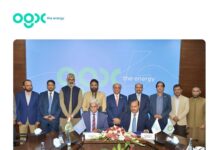
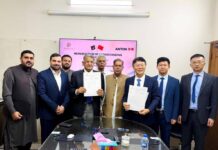
ISLAMABAD: In a major development, the most strategic and precious mineral known as antimony has been found in Balochistan and, to this effect Oil and Gas Development Company Limited (OGDCL) and Pakistan Mineral Development Corporation (PMDC) under an MoU signed some months back between them have carved out a plan to explore the said mineral and market it on a best business model.
A leading exploration and production company in the oil and gas sector is now all set to emerge as the country’s biggest company in the mineral sector under the approval of OGDCL board to diversify its investment in the mineral sector, says a senior official of OGDCL.
“So OGDCL inked an MoU with PMDC some months back under which PMDC would share its historical data of all the minerals and its expertise and in return, OGDCL would provide resources to tap the potential of minerals in the country. Both OGDCL and PMDC would have 50:50 percent shares in all business deals. Right now both OGDCL and PMDC are now working to enter into a Joint Venture which will be announced in the Pakistan Ministerial Investment Forum to be held in Islamabad on April 8-9.”
To this effect, both OGDCL and PMDC have purchased two blocks — one in Killa Abdullah and another in Zhob where the occurrences of antimony minerals at a large scale have been observed. The consortium of OGDCL and PMDC is also in the process to get hold of 10 blocks in Gilgit-Baltistan for precious metallic minerals. Out of 10 in GB, 6 blocks have indications of gold and copper deposits whereas 4 blocks have expected reserves of nickel, cobalt and other precious metallic minerals. “The GB government has revised its mineral policy and will now undertake the process of competitive bidding for the said blocks very soon. Earlier its policy was based on a first come first serve basis for allocating the blocks.” The OGDCL teams recently visited GB and to this effect, PMDC experts also conducted the field visit in GB.
“We have also engaged the Punjab Mineral Department for minerals identified in Chiniot, Punjab, as it is much easier to work in areas in Punjab because of better law and order situation and accessibility to the minerals sites.”
“However, coming to the mineral of antimony in Killa Abdullah and Zhob in Baluchistan, we would initiate the remote sensing process, and geological survey to exactly assess the length and depth of the strategic mineral of antimony.”
Antimony is a strategic critical mineral that is used in all manner of military applications, including the manufacture of armor piercing bullets, night vision goggles, infrared sensors, precision optics, laser sighting, explosive formulations, hardened lead for bullets and shrapnel, ammunition primers, tracer ammunition, nuclear weapons and production, tritium production, flares, military clothing, and communication equipment. It is the key element in the creation of tungsten steel and the hardening of lead bullets, two of its most crucial applications during WWII. At present, China is the largest exporter of antimony in the country. The value of antimony is hovering in the range of $22000-32000 per ton.
“Oman has the processing facility for minerals like antimony which can be used,” OGDCL’s official told this scribe.
“We lack the technology and required human resources to tap the potential of minerals in the country. So to address this issue, OGDCL is ready to provide financial resources and geologists and in contact with the Higher Education Commission (HEC) and eminent universities to introduce a modern syllabus about the minerals sector like in Australia, Chili, Canada, and Mexico so that the country could produce quality engineers, technologists.”
The government, he said, is also trying to make a harmonized regulatory framework for mineral policy to be pitched before the foreign investors and eminent delegates in the Pakistan Minibreak Investment Forum 2025.
The official said that OGDCL has also approached the National Vocational and Technical Training Commission (NAVTTC) and various technical boards in the country to have a skills labour for the minerals sector. He said for gemstones, Pakistan imports human resources from Sri Lanka. Ends