By SKM
September 24, 2025
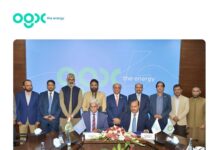
ISLAMABAD: In a landmark development that could reshape Pakistan’s economic trajectory, the government has finalized a record-breaking Rs. 1.225 trillion circular debt restructuring and financing deal with the country’s leading banks. The agreement, signed at a high-profile ceremony at the Prime Minister’s House in Islamabad, represents one of the most ambitious financial interventions in Pakistan’s history. It aims to resolve the chronic circular debt crisis in the power sector while injecting new confidence into the financial markets and setting a precedent for collaborative economic reform.
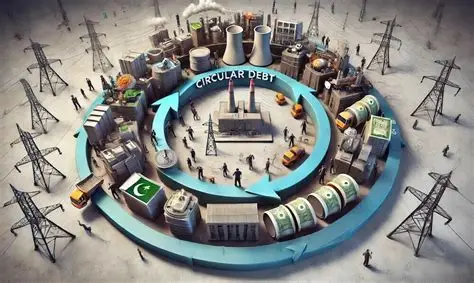
Circular debt—an entrenched problem that has long plagued Pakistan’s energy ecosystem—currently stands at an alarming Rs. 2.4 trillion, equivalent to roughly 2.1% of GDP. This recurring liability has disrupted cash flows, undermined the operational viability of power producers, and discouraged both local and foreign investment. The government’s inability to pay independent power producers (IPPs) on time has created a vicious cycle of inefficiency, with consequences spilling over into fiscal deficits and energy shortfalls. Against this backdrop, the latest agreement is being hailed by stakeholders as a breakthrough solution offering both scale and sustainability.
The deal is built on a dual-structured framework. First, it restructures Rs. 659.6 billion worth of existing loans held by banks, reducing the government’s immediate debt servicing obligations and securing more favorable terms. Second, it introduces Rs. 565.4 billion in fresh financing to pay off long-overdue liabilities to IPPs. This infusion is expected to restore liquidity in the energy supply chain, ensuring that power generation and distribution companies can operate without the bottlenecks that have constrained them for years. Importantly, the entire package is designed to avoid imposing any new burden on the government budget or electricity consumers. Repayments will be made through the existing Rs. 3.23 per unit debt servicing surcharge, ensuring a predictable and transparent repayment structure.
What makes the deal particularly noteworthy is the concessional pricing agreed upon by the banking sector. The facility is priced at KIBOR minus 90 basis points, a significant concession compared to typical market rates. This unusual move reflects the banking industry’s willingness to prioritize national interest over short-term profitability. Moreover, the transaction unlocks Rs. 660 billion in sovereign guarantees previously tied up with energy-sector liabilities. This released liquidity will now be available for productive lending to high-impact sectors such as agriculture, small and medium enterprises (SMEs), affordable housing, education, and healthcare—amplifying the economic benefits of the transaction far beyond the power sector.
Zafar Masud, Chairman of the Pakistan Banks Association (PBA) and President of The Bank of Punjab, called the agreement a watershed moment in Pakistan’s economic narrative. “This transaction is not just about numbers. It’s about demonstrating the private sector’s resolve to play a constructive role in national development. By working together, we’ve shown that complex national problems can be solved through collaboration, innovation, and shared responsibility,” he said. His remarks captured the spirit of the deal—an initiative that bridges the gap between public sector urgency and private sector capacity.
Policymakers and economic analysts are already pointing to this deal as a model for tackling other structural challenges. Its emphasis on financial innovation, transparency, and cooperative governance presents a replicable framework that could be applied to reforming other critical sectors, including state-owned enterprises, water management, and public transport. The agreement also aligns closely with Pakistan’s ongoing commitments to international financial institutions such as the International Monetary Fund (IMF), which has repeatedly emphasized the need for power sector reform as a cornerstone of fiscal consolidation.
Despite the optimism, experts caution that the success of the deal ultimately hinges on effective implementation. Pakistan’s power sector still suffers from deep-rooted inefficiencies—such as distribution losses, electricity theft, and weak regulatory enforcement—that must be addressed if the benefits of this transaction are to be sustained. Additionally, the political durability of the Rs. 3.23 surcharge is critical; any populist reversal of this mechanism could jeopardize the repayment plan and erode the credibility of the agreement.
Nevertheless, the Rs. 1.225 trillion circular debt resolution marks a historic step forward. It offers not only immediate relief to the energy sector but also creates fiscal space for broader development. By demonstrating a new level of coordination between public institutions and private financial entities, the deal represents a maturing of Pakistan’s economic governance. If managed well, this initiative could stand as a defining moment in the country’s journey toward long-term economic resilience and stability. Ends