By SKM
May01, 2025
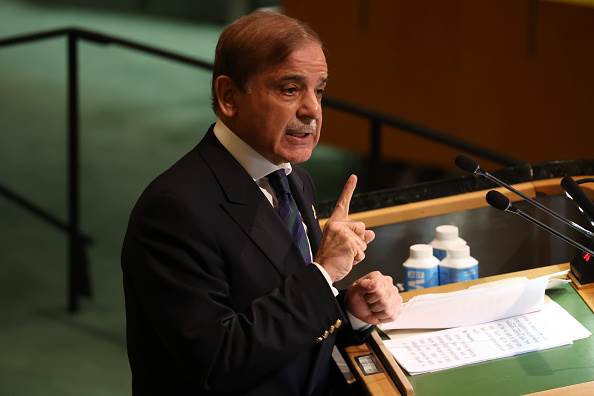
ISLAMABAD: The Power Division here on Thursday pitched a revised Integrated Generation Capacity Expansion Plan to purchase the electricity in next 10 years from the least cost value power project before Prime Minister Shehbaz Sharif in a high-level briefing aiming to save $17 billion (Rs4743 billion).
Prime Minister Shehbaz Sharif has given the nod to the revised IGCEP asking any delay in completion of the project will be not tolerable.
The Power Division has also adjusted the completion dates of the committed projects which will help save $10 billion (Rs2790 billion). It also omitted the projects of high-cost of 7969MW by saving $7 billion (Rs1953 billion). The said two factors will help Rs2 per unit in the next 10 years’ time.
Under the revised IGCEP 2024-34, the Prime Minister has been briefed that out of 14,984 MW projects, 7969 MW high-cost projects have been omitted and only the least-cost projects of 7017MW have been made part of the revised plan.
The power division has prioritized the projects based on local resources such as hydro, wind, nuclear, local coal, solar and the projects based on imported fuel (RLNG, imported coal) will not be established anymore. This modus operandi will help save billions of foreign exchange reserves per annum.
The Prime Minister said that after giving relief to the masses in the power tariff by Rs7.41 per unit, the power division is on the way to introduce solid reforms in the power sector.
He also directed the authorities concerned to complete the projects of paramount importance such as Diamer-Bhasha dam on top priority and any delay in completing the projects will not be tolerated. The Premier said that in near future, the private power market would soon be established which will ensure electricity to consumers at competitive rates and this process will help reduce the electricity prices.
According to the top officials at the Power Division, the System Operator (SO) has developed this plan by preparing demand forecast and developing Indicative Generation Capacity Expansion Plan (IGCEP) and Transmission System expansion Plan (TSEP) holistically. The purpose is to optimize long-term resource value for electricity consumers by developing an affordable, sustainable and reliable power system.
They also said that the revised IGCEP 2024-34 would be tabled before NEPRA for approval. The power regulator would hold public hearing on the revised IGCEP and then it would be accorded final approval.
According to the officials, the National Electricity Policy states: “Expansion in generation capacity shall be only on competitive and least cost basis (for Strategic Projects, Least Cost Violation is calculated).”
In line with this policy, the Grid Code PC.4 mandates that: “System Operator should develop an Integrated System Plan (ISP) (annually based on least cost principle) that should include Demand Forecast, IGCEP & TSEP and should be submitted to the Authority for approval.”
Accordingly, they said, the System Operator prepared and submitted the Integrated Generation Capacity Expansion Plan (IGCEP) to NEPRA in April 2024. This submission came under significant scrutiny due to emerging sectoral dynamics – namely, declining electricity demand, a rising share of net metering, and the presence of a large volume of committed capacity additions. These developments raised concerns over the potential burden on end consumers if the committed projects were approved without re-evaluation.
As per the draft IGCEP-2024-34, a total of 25,973 MW of new capacity additions was considered, of which 25,573 MW (98.5%) was categorized as committed capacity, leaving only 400 MW (1.5%) as candidate capacity subject to optimization. The Net Present Value (NPV) of this proposed plan stood at USD 64.30 billion, with a breakup of USD 42.61 billion in fixed costs and USD 21.69 billion in generation costs.
Given the high reliance on committed projects and reduced demand projections, a detailed review of the committed project criteria was undertaken. Considering the assumptions and policy provisions, the IGCEP draft submitted to NEPRA was thoroughly assessed, wherein 73 projects were initially classified as committed in the draft IGCEP-2021-31. These projects were facilitated by various project executing agencies, including but not limited to PPIB, AEDB, GoS, GoKPK, AJK-HEB, and WAPDA, and collectively amounted to a capacity of 22,418 MW. By the end of 2024, 7,434 MW of this capacity had been commissioned. The remaining capacity within the committed category stood at 14,984 MW. These projects were subsequently reviewed to determine whether they truly meet the revised criteria for the committed category, with the evaluation based on the following principles under which for Public Projects the criteria set was: i) Financial Commitment against Funds required; ii) Construction progress greater than 10% and iii) Financial progress is greater than 10%
Following the application of the revised criteria, only 7,017 MW out of the initial 14,984 MW qualified to remain in the committed category. The remaining projects were subsequently evaluated under the least cost optimization framework within the IGCEP.
Based on the refined categorization of committed projects, the system achieved savings of Rs 1015 billion relative to a business-as-usual case with forced capacity additions.
Evaluation of Strategic Projects under Least Cost Violation (LCV):
As permitted by the National Electricity Policy 2021 and National Electricity Plan 2023:
“Strategic projects may be allowed provided that their LCV beyond selection cost is to be calculated and shall be borne by the sponsoring agency.”
They said, accordingly, Chashma-5 (C-5) and Diamer Bhasha were evaluated using the Least Cost Violation (LCV) methodology wherein, Chashma-5 was selected with an LCV of USD 0.079 billion in FY 2032 and Diamer Bhasha was optimized on least cost according to its commissioning schedule.
However, Chashma-5 was optimized in FY 2038 on least cost basis without having to pay any LCV payment. As per the criteria outlined in the National Electricity Plan 2023-27, LCV payment will only be applicable for the first 06 years of operations i.e. FY 2032 till FY 2037. Consequently, the amount to be paid as LCV in terms of Chashma-5 comes out to be PKR 14 billion (including financing charges of debt) post-COD (structured as 12 semi-annual installments of PKR 1.17 billion). Ends