
By SKM
September 19, 2025
ISLAMABAD: In a major step toward liberalizing Pakistan’s power sector, the Government of Pakistan has reaffirmed its strong commitment to implementing the Competitive Trading Bilateral Contract Market (CTBCM) — a transformative initiative that aims to reshape how electricity is bought, sold, and consumed nationwide.
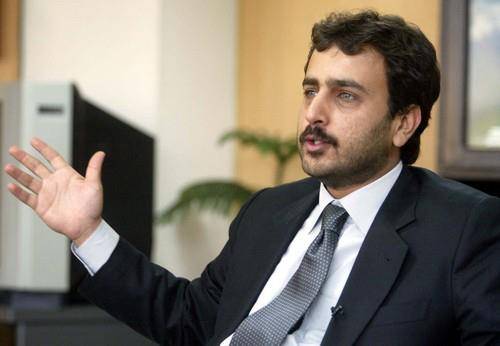
The announcement was made on Friday by Federal Minister for Power Division, Awais Ahmed Khan Leghari, while addressing a high-level stakeholder workshop organized by the Independent System and Market Operator (ISMO) in Islamabad. The event brought together energy regulators, investors, development partners, consumer representatives, consultants, and media professionals.
The workshop, attended by a wide array of energy experts and private sector stakeholders, is set to deliberate on the draft CTBCM framework prepared by the Power Division. Participants are expected to provide detailed input to further refine the framework and ensure its viability within a multi-buyer competitive market model.
Commending ISMO’s leadership in advancing structural reforms, Mr. Leghari described CTBCM as “a carefully planned transformation that is now moving from vision to reality.” Central to its implementation is the Auction Framework — a transparent and competitive process to allocate 800 MW of wheeling demand, which will allow large electricity consumers to directly procure power from suppliers of their choice.
“This isn’t an experiment,” the minister remarked. “This is a decisive reform that will fundamentally reshape our electricity market.”
CTBCM represents a significant departure from Pakistan’s traditional single-buyer, centralized model. Under the new system, industrial and commercial consumers — especially those in export-driven sectors — will be able to contract electricity from competitive suppliers. The move is expected to drive down electricity costs, improve supply reliability, and enhance the role of renewable energy in the national energy mix.
“This is not just about setting new rules,” Mr. Leghari said. “It’s about building trust, encouraging innovation, and giving consumers real choice. Industrial users, in particular, stand to benefit by accessing competitively priced, reliable, and increasingly green energy sources.”
The minister emphasized that these reforms align with the government’s broader economic objectives — including improving industrial competitiveness, lowering the cost of doing business, and unlocking Pakistan’s export potential.
Far from being a ceremonial event, the workshop was positioned as a genuine forum for consultation and consensus-building. Stakeholders from across the power sector — including generators, suppliers, consumer groups, and investors — were invited to share their perspectives on the auction guidelines and overall market structure.
“We are not imposing a top-down reform. We are building a collaborative framework where every voice matters,” Mr. Leghari assured the participants.
The CTBCM initiative comes at a particularly critical time. With the economy under pressure and energy prices climbing, the government sees the reform as a strategic move to ensure long-term sustainability in the energy sector. He noted that beyond reducing costs, the framework will also facilitate the integration of renewable energy, attract private and foreign investment, and improve the operational and financial efficiency of the overall power system.
“This is not just a power sector reform — it’s an economic, environmental, and social imperative,” a government spokesperson added.
While acknowledging that challenges lie ahead — including market design complexities, regulatory adjustments, and inter-agency coordination — the minister stressed that inaction is not an option.
“Without reform, inefficiencies will persist, investor confidence will erode, and consumers will continue to suffer from high costs and unreliable supply,” Mr. Leghari said. “This is our collective responsibility.”
The government reaffirmed its full political and institutional backing for ISMO and NEPRA in operationalizing the CTBCM and rolling out the Auction Framework. The workshop marked a critical step toward implementing one of the most ambitious electricity market reforms in the country’s history — with the aim of creating a more transparent, competitive, and consumer-oriented power sector. Ends