By SKM
September 24, 2025
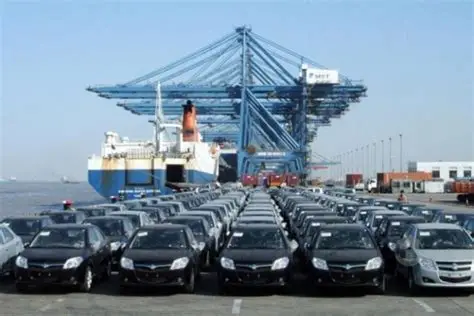
ISLAMABAD – In a significant policy breakthrough, the Economic Coordination Committee (ECC) of the Cabinet has given the green light for the commercial import of used vehicles into Pakistan — a bold move likely to reshape the country’s automotive sector and consumer market. The meeting was chaired virtually from New York by the Federal Minister for Finance and Revenue, Senator Muhammad Aurangzeb, and convened at the Finance Division in Islamabad.
The committee here on Wednesday (September 24, 2025) deliberated extensively on a summary regarding amendments to the Import Policy Order, 2022, and approved commercial imports of used vehicles, subject to stringent regulatory controls. As per the decision, only vehicles not older than five years will be allowed under this provision until June 30, 2026. Beyond this transition period, the vehicle age restriction will be lifted, opening the market to a wider range of imported automobiles.
In an effort to safeguard local industry and ensure a gradual transition, the ECC imposed a 40% Regulatory Duty (RD) on these imports, which will be levied in addition to existing customs duties. This elevated duty will remain in effect until the end of FY2025-26, after which it will be reduced by 10 percentage points annually, eventually phasing out completely by FY2029-30, in line with the Tariff Policy Board’s recommendations.
The ECC also stipulated that all commercial imports under this provision must strictly adhere to environmental and safety standards, ensuring that public health, road safety, and emission controls are not compromised. This condition reflects the government’s intent to align economic liberalization with environmental sustainability and responsible governance.
Massive Funding Boost for Virtual Asset Regulation
In a parallel move toward digital financial governance, the ECC approved a Technical Supplementary Grant (TSG) of Rs800 million for the newly established Pakistan Virtual Asset Regulatory Authority (PVARA). The funds will be used to build the institutional and technical capacity of the authority, enabling it to function as the central regulator for digital and virtual assets, including cryptocurrencies, blockchain platforms, and tokenized financial products.
The move is being seen as a strategic pivot toward digital modernization, placing Pakistan on the path to regulatory parity with developed markets. With this funding, PVARA is expected to lay the groundwork for comprehensive oversight mechanisms to regulate virtual assets while safeguarding investors, promoting innovation, and countering illicit financial flows.
This decision underscores the government’s broader commitment to financial innovation, as well as its recognition of the growing relevance of virtual economies in global trade and investment ecosystems.
The ECC meeting was attended by several senior members of the federal cabinet, reflecting the importance of the policy decisions under consideration. Ali Pervaiz Malik, Federal Minister for Petroleum, Rana Tanveer Hussain, Federal Minister for National Food Security and Research and Sardar Awais Ahmad Khan Leghari, Federal Minister for Power attended the meeting
In addition, federal secretaries and senior officials from key ministries and regulatory bodies participated in the proceedings, offering sector-specific insights and technical recommendations that informed the committee’s final decisions.
These twin policy decisions — liberalizing used vehicle imports and empowering virtual asset regulation — signal a strategic reorientation of Pakistan’s economic priorities. On one front, the government is addressing consumer demand and affordability in the auto sector; on the other, it is establishing regulatory infrastructure for the digital financial future. Ends