
By SKM
March 15, 2026
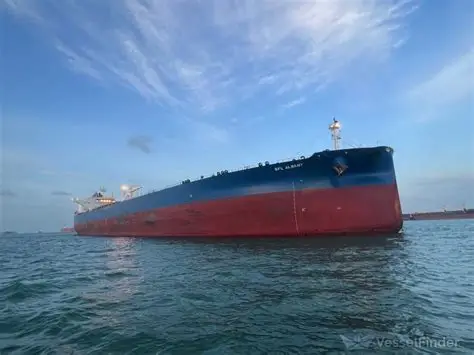
ISLAMABAD: Amid the brewing crisis around the Strait of Hormuz, Pakistan’s plan to receive a Very Large Crude Carrier (VLCC) carrying nearly two million barrels of crude oil at Port of Duqm has been shelved after Saudi Arabia informed Islamabad that the port is no longer considered safe for such a massive vessel following recent security incidents in the region.
Instead, Riyadh has agreed to supply four separate crude oil cargoes directly to Pakistan to ensure uninterrupted energy supplies.
According to well-placed officials, Pakistan had requested to Kingdome of Saudi Arabia to ensure the deployment of a VLCC that would anchor near Oman, from where crude oil could be transferred to smaller ships for onward delivery to Pakistani terminals. However, Saudi authorities conveyed that deploying a supertanker in the area was not feasible under the current security environment.
Under the revised arrangement, the crude will now be shipped in four smaller cargoes to Pakistan’s main oil terminals at Kemari Port and Port Qasim.
Earlier, Pakistan National Shipping Corporation (PNSC) had engaged a consultancy firm to assess whether a VLCC could safely anchor in Pakistan’s offshore waters and whether ship-to-ship transfer operations could be carried out—allowing crude oil to be moved from a mother vessel to smaller daughter ships before being transported to domestic ports. However, the company has yet to submit its feasibility report.
Given the urgency of Pakistan’s energy requirements, Saudi authorities agreed to immediately arrange four cargo shipments with each having 70000 barrels rather than wait for the study to be completed.
Officials said Pakistan’s refineries currently have adequate crude oil stocks to meet near-term demand. A senior official said Pak-Arab Refinery Limited (PARCO) alone has sufficient crude supplies until April 16, factoring in cargoes already ordered.
Meanwhile, shipments are already on their way. A cargo carrying around 73,000 barrels of crude oil loaded from Yanbu Port has crossed the Red Sea, entered waters near Oman and is expected to reach Pakistan between March 18 and 19.
Out of the four cargoes being arranged in place of the VLCC, Pakistan has so far booked three shipments, while the fourth is expected to be ordered within the next two days. Of the cargoes booked, one will be supplied to National Refinery Limited (NRL), another to Pak-Arab Refinery Limited (PARCO), while the third will be shared between PARCO and Pakistan Refinery Limited (PRL) in an 80:20 ratio.
In addition to the Saudi shipments, PARCO is scheduled to receive one cargo of around 70,000 barrels from Fujairah Port on March 18, followed by two more cargoes from the same port expected on March 24 and March 28. The refinery will also receive two additional shipments from Yanbu, arriving on March 28 and March 29.
Officials also disclosed that Fujairah Port—one of the Gulf’s key oil transit hubs—remained temporarily closed for four to five hours on Sunday morning due to reported attacks but later resumed operations, allowing cargoes destined for Pakistan to be loaded.
Despite the evolving security challenges in regional waters, major suppliers Saudi Aramco and Abu Dhabi National Oil Company (ADNOC) are said to be cooperating closely with Pakistani authorities to ensure the country’s energy supply chain remains stable during the current period of heightened tension. Ends