
By SKM
December 4, 2025
ISLAMABAD: Pakistan on Thursday proposed the creation of a CASA Energy Market, a European-style regional electricity market aimed at enabling Central Asia and South Asia to jointly harness their renewable and conventional power resources and strengthen long-term energy security.
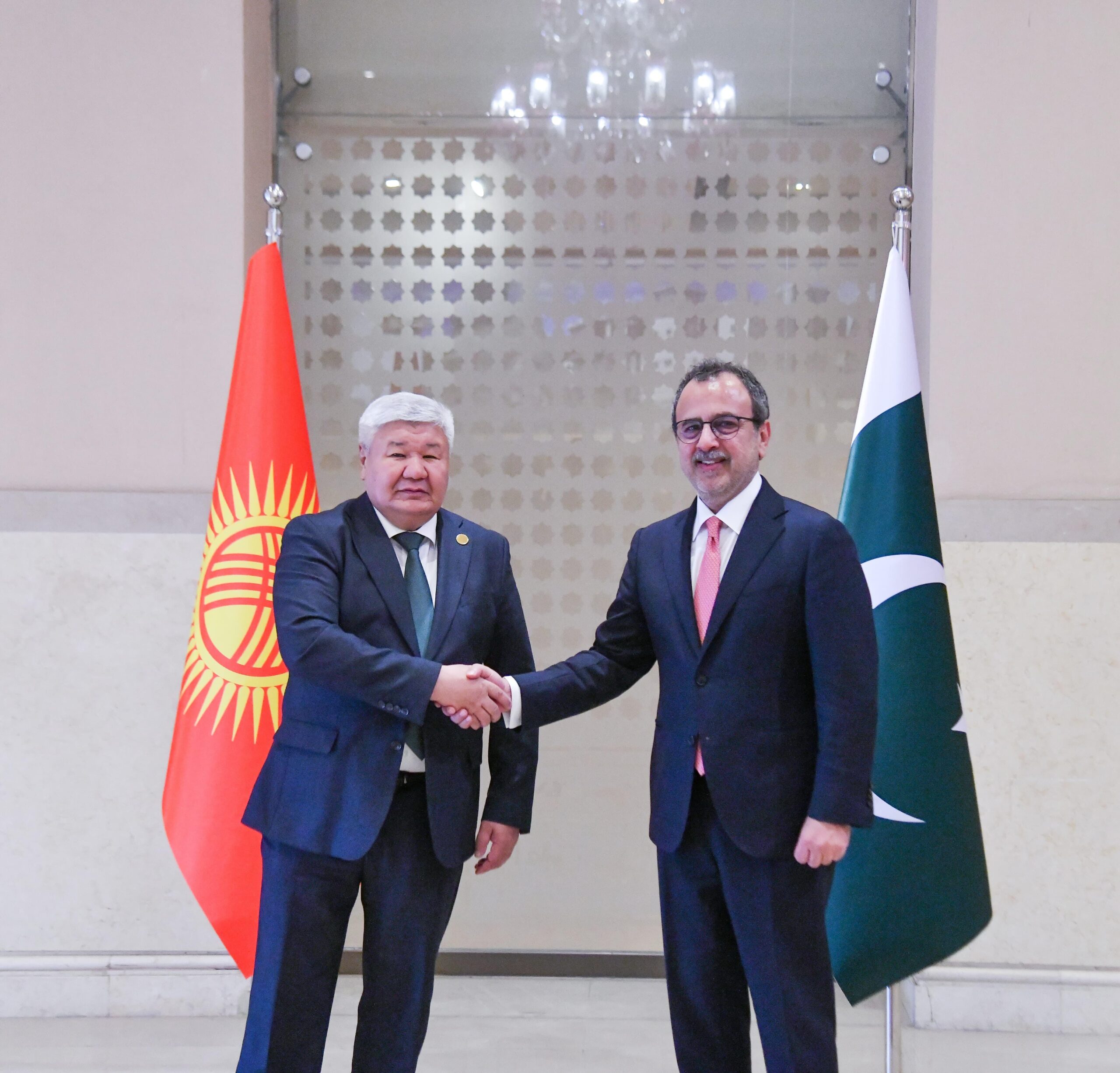
The proposal was put forward by Federal Minister for Power Sardar Awais Ahmed Khan Leghari during a meeting in Islamabad with the Kyrgyz Republic’s Minister for Energy, Mr. Ibrarv Taalaibek Omukeevich.
Welcoming the Kyrgyz delegation, Leghari said Pakistan is committed to a practical and economically viable implementation of CASA-1000, the regional transmission project designed to export surplus hydropower from Central Asia to Pakistan. He emphasised that the CASA Energy Market should be designed to account for seasonal variations in low-cost electricity availability in both regions, ensuring that the project is sustainable and commercially competitive.
The minister said that Pakistan’s segment of the CASA-1000 infrastructure is scheduled for completion by mid-2026, and since all participating countries have made substantial investments, they should work jointly to optimise the project’s economics. He also highlighted remarks from Pakistan’s leadership on how “Afghanistan’s stability is directly tied to rational regional connectivity,” noting that all regional energy initiatives depend on cooperation, predictability, and coordinated policy action.
Leghari also proposed that northern Pakistan be included in feasibility studies for the planned Kyrgyzstan–China transmission link, noting that the integration of Pakistan’s northern grid would expand the project’s strategic relevance and economic benefits for all countries involved.
During the meeting, the Federal Minister presented a five-point framework for future bilateral energy cooperation. The plan calls for:
Establishing a Joint Working Group on Hydropower Projects to exchange technical expertise.
Accelerating and jointly advancing the CASA-1000 project through coordinated actions.
Exchanging lists of specialised fields to facilitate the deployment of Pakistan’s skilled workforce in Kyrgyz energy projects.
Including northern Pakistan in feasibility studies for the Kyrgyzstan–China grid interconnection.
Forming dedicated Joint Working Groups to steer long-term collaboration across multiple energy domains.
Leghari stressed that Kyrgyzstan’s support in engaging Afghanistan will be crucial to reducing volatility and ensuring sustained regional connectivity. “The success of any regional energy corridor depends on stability, cooperation, and timely decision-making,” he said.
Both sides agreed to intensify high-level engagements to address challenges facing ongoing regional projects, including CASA-1000. They also decided to convene an expert-level meeting in Bishkek, bringing together officials from Pakistan, Kyrgyzstan, Tajikistan, and the World Bank to develop a unified implementation strategy.
Kyrgyz Energy Minister Mr. Ibrarv Taalaibek Omukeevich thanked Pakistan for its warm hospitality and reaffirmed his country’s commitment to strengthening bilateral cooperation. He endorsed Pakistan’s proposal for deeper coordination, saying Kyrgyzstan is “ready to extend all forms of support” to enhance the existing energy partnership between the two nations.
With renewed momentum and a proposed new regional energy architecture, officials from both countries expressed optimism that CASA-driven cooperation could serve as a cornerstone for broader economic integration between Central Asia and South Asia. Ends